
For Immediate Release
Media Contact:
Robin Tung
Director of Public Relations
Building Decarbonization Coalition
robin@buildingdecarb.org
Senator Wiener’s Heat Pump Access Act clears Legislature which would make California first state in nation to streamline heat pump permitting
SB 222 will make installations faster, easier, and more affordable for homeowners and contractors.
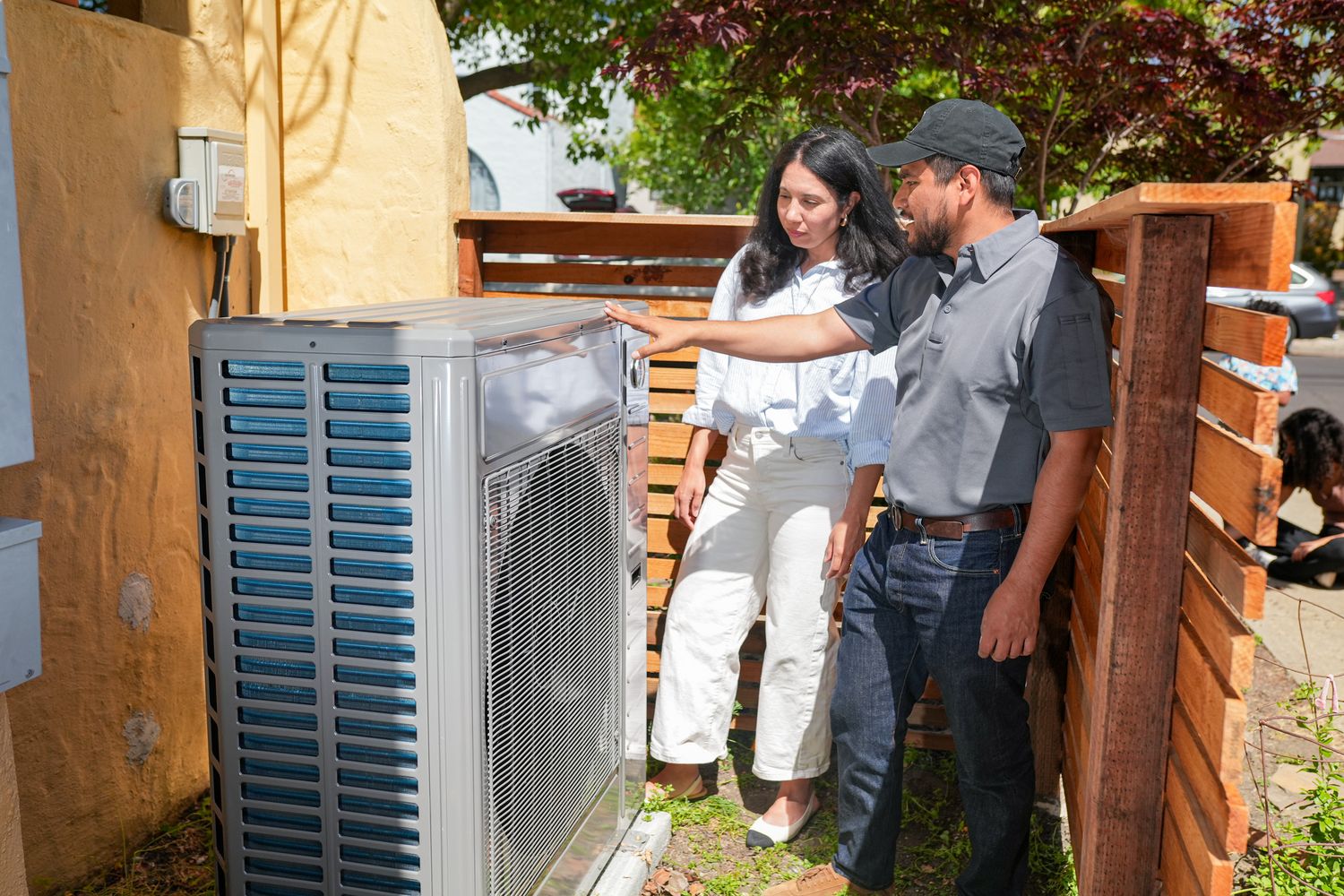
SACRAMENTO, Calif. — Today, the California Legislature voted to pass the Heat Pump Access Act (SB 222), authored by Senator Scott Wiener (D-San Francisco)—which would make California the first state in the nation to streamline heat pump permitting. SB 222 will make it faster, easier, and more affordable for California families to install heat pumps for clean, affordable cooling and heating. The bill passed in a 32-5 vote and with broad support from California trade associations, contractors, health advocates, and environmental groups.
“Speeding up low-cost installations for heat pumps is how we protect California families from extreme heat and rising energy costs,” said Senator Scott Wiener. “Californians need to be able to afford their monthly utility bills, and they need cooling to guard against the risks of extreme heat. Heat pumps are a no-brainer solution, which is why we’ve seen huge support for the bill in the Legislature and across a diverse coalition of labor, industry leaders, and environmentalists.”
Currently, California’s patchwork of rules across roughly 600 local jurisdictions drives up costs and creates long and unnecessary delays to install heat pumps. Inconsistent and complex local permitting requirements slow adoption. In fact, an estimated 75 to 90 percent of heat pump installations in California are currently completed without a permit at all, meaning no safety inspection or oversight.
The Heat Pump Access Act will establish a consistent, statewide permitting process for heat pumps and require jurisdictions to provide:
- Automated permitting for standard heat pump installations
- Reasonable, transparent permit fees with no surprise costs
- A single, unified permit type covering both heat pump HVAC systems and water heaters
- Limits on excessive HOA restrictions, documentation, or aesthetic requirements
“We thank Senator Wiener and the Legislature for prioritizing Californians who urgently need clean and affordable cooling as households face high costs of living,” said Madison Vander Klay, Government Affairs Manager at the Building Decarbonization Coalition. “Demand for highly efficient heat pumps is here, and the Heat Pump Access Act clears that path and cuts unnecessary red tape. Californians and the contractors who serve them deserve a simpler, faster, more predictable and affordable process for installing heat pumps.”
Heat pumps are a critical solution for expanding access to clean and highly efficient cooling in California, and can protect households from heat waves and high power bills. Data from TECH Clean California shows that households can save an average of $304 a year by switching to a heat pump for space heating and cooling, and $97 annually when upgrading from a gas water heater to a more efficient heat pump water heater. For households without cooling, speeding affordable permitting for heat pumps can be life-saving, and the same data shows that adding cooling to homes without previous air conditioning adds a median of $3 a month to energy bills. A recent statewide survey of heat pump owners found that more than 90% of customers were satisfied with their heat pump water heaters and HVAC heat pumps.
“Heat pumps are one of our best tools for cutting pollution, lowering energy bills, and keeping people safe from extreme heat,” said Colleen Corrigan, Sustainability and Resilience Policy Manager at SPUR. “But right now, inconsistent local permitting and avoidable soft costs are adding hundreds of dollars to every installation, pricing out the households who need this technology most. SB 222 fixes the parts of the permitting process that don’t need to be broken—instant permits for standard installs, one permit instead of two, and fees homeowners can actually predict.”
The Heat Pump Access Act supports California’s workforce by making it easier for contractors and technicians to install heat pumps. This allows contractors to more efficiently provide quality installations and grow their business and spend less time on complex and complicated restrictions and paperwork. The bill also supports California’s progress to meet Governor Gavin Newsom’s goal of installing 6 million heat pumps by 2030 and creating 7 million climate-ready homes by 2035 in order to achieve carbon neutrality by 2045.
“Every gas furnace and water heater we replace with a heat pump means cleaner air in our neighborhoods and less pollution across the Bay Area,” said Alan Abbs, Legislative Officer for the Bay Area Air District. “The Heat Pump Access Act removes the permitting barriers that keep too many families from making this switch and supports the transition to zero-emission buildings. We are proud to co-sponsor legislation that protects public health, lowers energy costs and helps the region meet its clean air and climate goals.”
SB 222 is co-sponsored by the Building Decarbonization Coalition, the Bay Area Air District, and SPUR. The bill now heads to the Governor’s desk with a deadline of September 30 to sign or veto the bill.
###
ABOUT THE BUILDING DECARBONIZATION COALITION
The Building Decarbonization Coalition (BDC) aligns critical stakeholders on a path to transform the nation’s buildings through clean energy, using policy, research, market development, and public engagement. The BDC and its members are charting the course to eliminate fossil fuels in buildings to improve people’s health, cut climate and air pollution, prioritize high-road jobs, and ensure that our communities are more resilient to the impacts of climate change. Learn more at www.buildingdecarb.org.
ABOUT SPUR
SPUR—the San Francisco Bay Area Planning and Urban Research Association—is a nonprofit public policy organization. Through research, education, and advocacy, we work to create an equitable, sustainable, and prosperous region by working at the nexus of housing, transportation, land use, economics, sustainability, and hazard resilience. One of SPUR’s sustainability and resilience policy team’s goals is to end the use of fossil fuels in Bay Area buildings by driving the adoption of electric appliances in existing buildings and new construction.
ABOUT THE BAY AREA AIR DISTRICT
The Bay Area Air District is the regional air quality regulatory agency for the San Francisco Bay Area and is committed to reducing air pollution in California and ensuring that every one of the region’s 7.5 million residents can breathe clean, healthful air. The Bay Area Air District is also committed to ensuring that the state’s most disproportionately affected populations realize emissions reductions as expeditiously as possible.