
How States, Cities and Utilities Can Advance Neighborhood-Scale Clean Heating and Cooling
Heating and cooling buildings consumes 43% of all energy used in the United States. To decarbonize our buildings, we need new technologies and new laws.
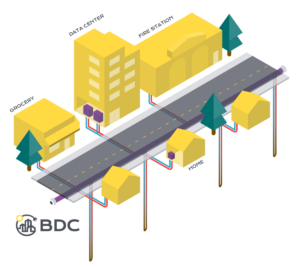
Interest is growing in thermal energy networks (TENs), systems of water-filled pipes that can replace gas pipelines to deliver combustion-free heating and cooling to neighborhoods. Since 2021, eight states have passed legislation enabling regulated utilities to pilot TENs. In 2025, several states introduced additional TENs bills, developing new legal models of delivering energy equitably, affordably, and at scale.
The Institute for Energy and the Environment at the Vermont Law and Graduate School and the Building Decarbonization Coalition created a guidebook for states crafting TENs-enabling legislation. This webinar introduces the guidebook and walks through lessons and studies from existing TENs laws.
We’ll explore:
- What are TENs, and why should we pass laws enabling them?
- How can legislation inform and shape pilots to ensure they are equitable, affordable, and effective?
- What legislation and regulation is required for a system-wide transition to clean heating and cooling with TENs?
Speakers:
Panelist: Eduardo Bakai, Global Energy Fellow, Institute for Energy and the Environment, Vermont Law and Graduate School. Eduardo’s research revolves around state laws and regulations supporting the neighborhood-scale use of TENs and its multiple associated benefits, with a focus on available ownership models.
Panelist: Lawrence Garber, Interim Associate Director of Policy Acceleration, Building Decarbonization Coalition. Lawrence synthesizes policy trends and, in collaboration with state-based coalitions, translates opportunities to multiple audiences across the building sector to accelerate equitable building decarbonization policy adoption at scale.
Moderator: Ania Camargo Cortés, Associate Director, Thermal Networks, Building Decarbonization Coalition. Ania leads the BDC’s work on thermal energy networks (TENs). She guides coalitions on legislative and regulatory strategy, education and outreach, and workforce development.
Host: Mark James, Interim Director of the Institute for Energy and the Environment and Associate Professor in the Maverick Lloyd School of the Environment at Vermont Law and Graduate School. Mark leads the IEE’s energy program. His research focuses on deploying regulatory and policy tools to advance a just clean energy transition including community benefit agreements, enhanced fiscal accountability for polluters, and equitable governance systems.
Who Should Attend?
State and local policymakers, elected officials and legislative staff, utility regulators, energy, climate and environmental justice advocates, utility representatives, labor union representatives, and anyone interested in the laws to support neighborhood-scale clean energy.