
For Immediate Release
Media Contact:
Tryn Brown
tbrown@buildingdecarb.org
(209) 402-9959
Senator Wiener Introduces Legislation to Streamline Heat Pump Permitting & Lower Energy Costs
The Heat Pump Access Act will modernize heat pump permitting to help make heat pump installations faster, easier, and more affordable for homeowners and contractors while supporting California in achieving its heat pump and climate targets.
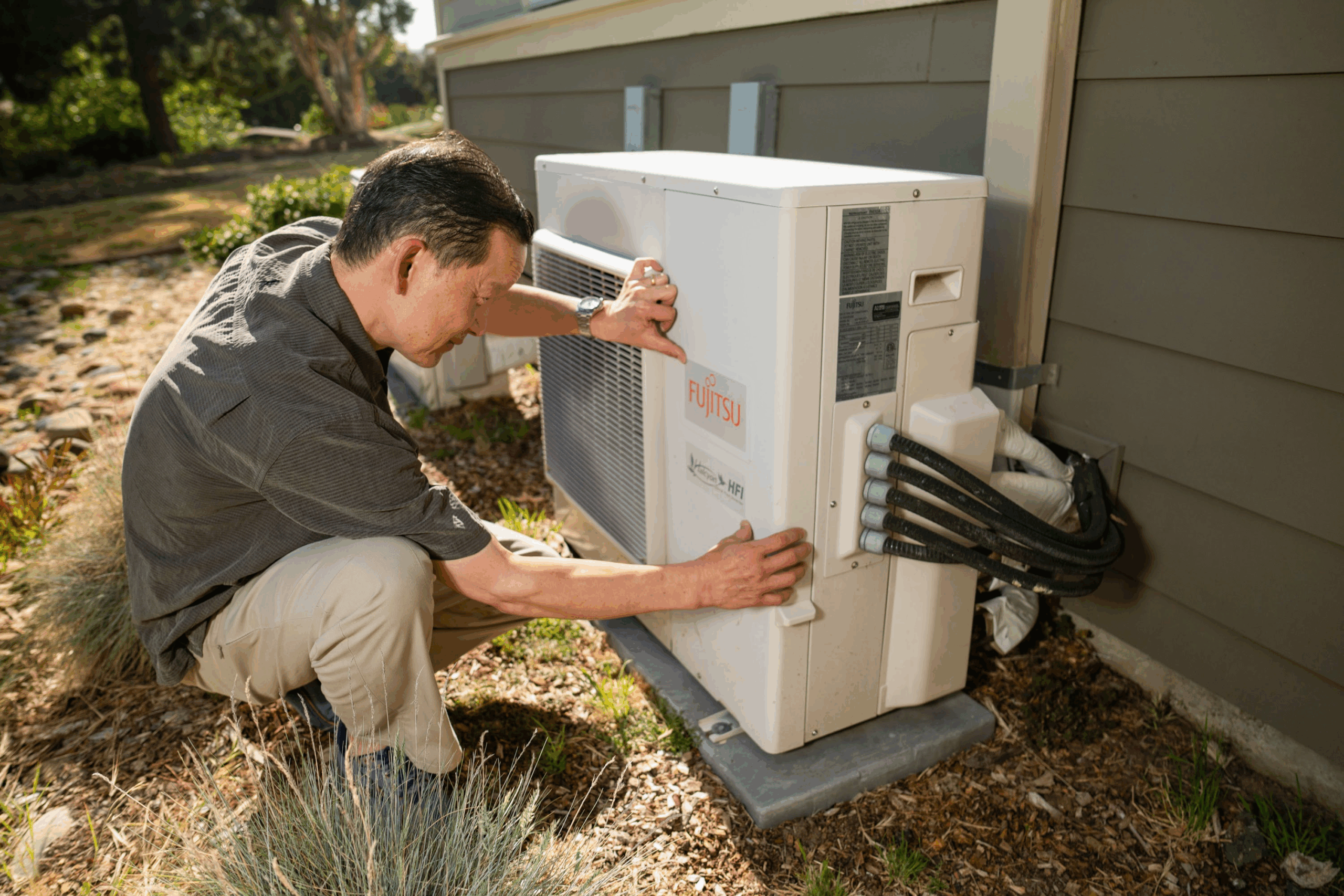
SACRAMENTO, Calif. (January 15, 2025) — SB 222, the Heat Pump Access Act authored by Senator Scott Wiener (D-San Francisco), passed through the Senate Committee on Local Government after passing the Senate Committee on Housing last week without any opposing votes. The Heat Pump Access Act is aimed at modernizing and streamlining California’s outdated permitting infrastructure for heat pump installations, and will make it faster, easier, and more affordable for homeowners and contractors to install cost-effective, efficient heat pumps for space cooling and heating, and water heating. The bill will also accelerate the adoption of these clean energy appliances to help the state meet its goals of installing 6 million heat pumps by 2030 and achieving carbon neutrality by 2045.
Heat pumps are highly energy efficient appliances that can serve as both an air conditioner and furnace. The average US household can save nearly $400 a year by switching to a heat pump for space cooling and heating. When paired with solar and/or battery systems, and outfitted with demand response capabilities, these savings can grow even more. This bill can help lower both upfront installation costs and household energy costs over time.
“SB 222 is a practical, high-impact solution to fast-track heat pump installations in California so households can benefit from improved energy efficiency, lower energy bills, and better resilience against extreme weather,” said Madison Vander Klay, Government Affairs Manager at the Building Decarbonization Coalition. “The Heat Pump Access Act will help equip homes with highly efficient heat pumps that provide comfortable cooling during extreme heat, and keep households safe and healthy.”
Heat pump permitting currently varies drastically across California’s 600 jurisdictions, with a patchwork of local requirements that make the system unnecessarily slow, expensive, and complex. This can pose major challenges for contractors who have to navigate long wait times for inspection, multiple permit types, high fees, and new processes for each city or region that slow installation projects and drive up costs.
The Heat Pump Access Act will create a consistent statewide framework by establishing:
- A simplified process that prohibits jurisdictions or HOAs from imposing additional zoning and planning requirements on heat pump installations
- A faster process that mandates instant permit issuance for simple heat pump installations
- A maximum of one permit for heat pump installations
- Standardized permitting fees with caps to improve affordability
“The Heat Pump Access Act is a commonsense way to reform the permitting system so that more Californians can access highly efficient heat pump technology, which helps provide life-saving clean cooling and air filtration during extreme heat, wildfires, and poor air quality days,” said Sam Fishman, Sustainability and Resilience Policy Manager at San Francisco Bay Area Planning and Urban Research Association (SPUR). “Standardizing the permitting process will simplify installations for homeowners and contractors and accelerate heat pump adoption to advance the state’s sustainability goals.”
“The Heat Pump Access Act removes permitting hurdles that have slowed the switch to cleaner, zero-NOx heat pumps,” said Dr. Philip Fine, Executive Officer of the Bay Area Air District. “By simplifying the process, we make it easier for households that are already burdened by poor air quality and extreme heat to install safer and more efficient systems. This is a practical step that delivers real benefits, including cleaner indoor air, reliable cooling during heat waves and a healthier future for Californians.”
Roughly a quarter of Californians still live in homes without air conditioning, and low-income households and communities of color are significantly less likely to have access to the cooling they need to stay safe during extreme heat events. Heat pumps provide clean cooling while also filtering indoor air rather than bringing polluted outside air into the home. The Heat Pump Access Act is critical to help households install these appliances more easily and help build climate resilience across the state.
Streamlining permitting for heat pumps will also support Governor Gavin Newsom’s goals of installing 6 million heat pumps by 2030 and achieving carbon neutrality by 2045. Heat pumps surpassed gas furnace shipments in 2024—showing clear momentum—and SB 222 can help support the state in scaling this clean energy technology at the rate needed.
The Heat Pump Access Act is co-sponsored by the Building Decarbonization Coalition, Bay Area Air District, and SPUR.
###
ABOUT THE BUILDING DECARBONIZATION COALITION
The Building Decarbonization Coalition (BDC) aligns critical stakeholders on a path to transform the nation’s buildings through clean energy, using policy, research, market development, and public engagement. The BDC and its members are charting the course to eliminate fossil fuels in buildings to improve people’s health, cut climate and air pollution, prioritize high-road jobs, and ensure that our communities are more resilient to the impacts of climate change. Learn more at www.buildingdecarb.org
ABOUT SPUR
SPUR—the San Francisco Bay Area Planning and Urban Research Association—is a nonprofit public policy organization. Through research, education, and advocacy, we work to create an equitable, sustainable, and prosperous region by working at the nexus of housing, transportation, land use, economics, sustainability, and hazard resilience. One of SPUR’s sustainability and resilience policy team’s goals is to end the use of fossil fuels in Bay Area buildings by driving the adoption of electric appliances in existing buildings and new construction.
ABOUT THE BAY AREA AIR DISTRICT
The Bay Area Air District is the regional air quality regulatory agency for the San Francisco Bay Area and is committed to reducing air pollution in California and ensuring that every one of the region’s 7.5 million residents can breathe clean, healthful air. The Bay Area Air District is also committed to ensuring that the state’s most disproportionately affected populations realize emissions reductions as expeditiously as possible.