
Welcome to The Clean Green Neighborhood!
By Tryn Brown, Associate Manager of Communications, and Javonne Lane, Senior Content Manager
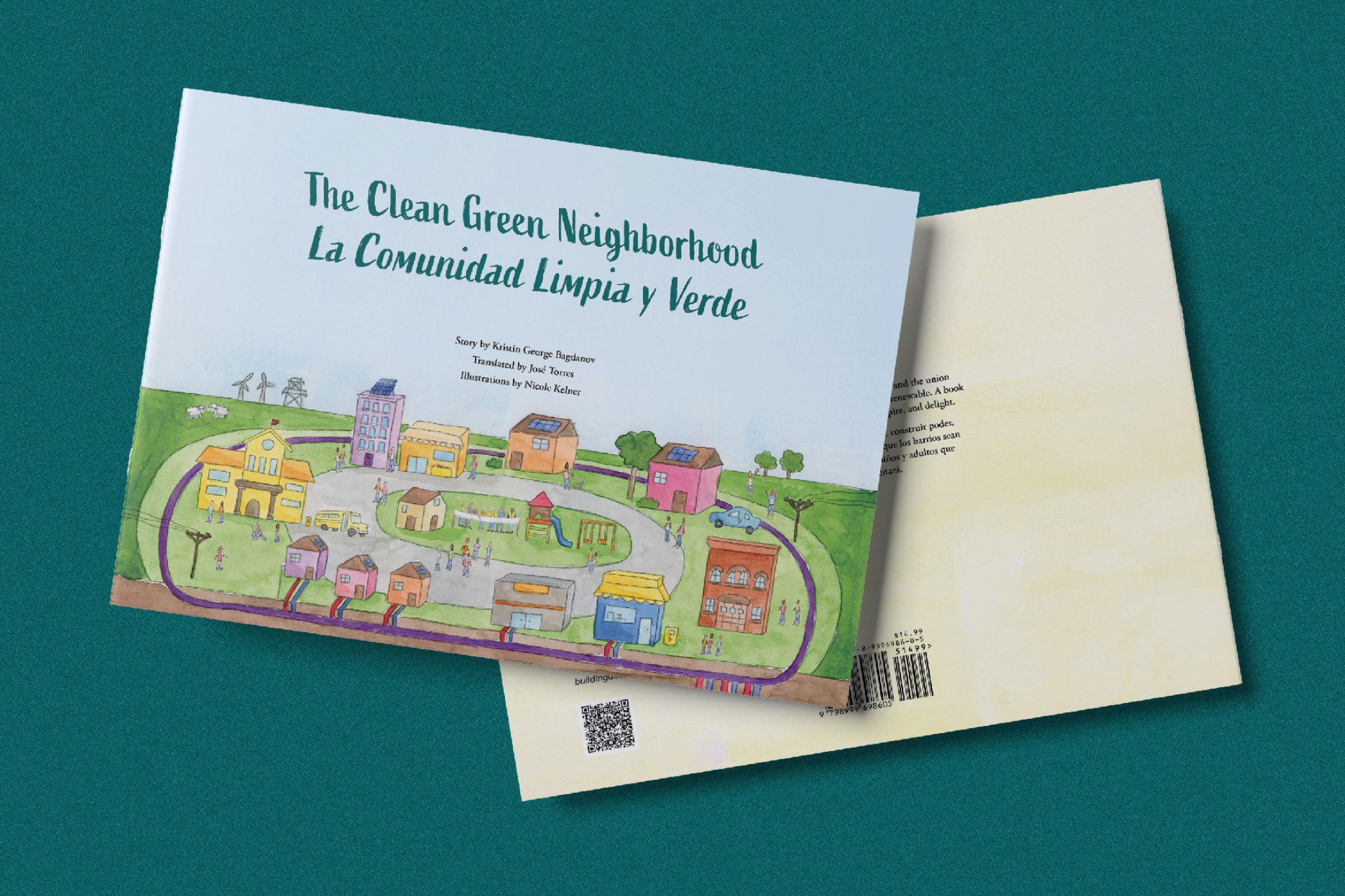
Imagine living in a neighborhood where the air is healthy, the buildings are safe and efficient, and the energy is clean. That’s what our new children’s book, The Clean Green Neighborhood, is all about: shifting to clean energy to transform the places where we learn, work, and play into healthier, more resilient spaces that we all deserve to live in.
These neighborhoods run on clean energy infrastructure, like thermal energy networks and an electric grid that is powered by renewable energy sources like the sun, wind, water, and earth. They are specifically designed to be more comfortable, efficient, and affordable for residents, and it’s clear that our communities are ready for this more resilient way of living.
Circle around, it’s story time
Explore the pages of The Clean Green Neighborhood with the author, Kristin George Bagdanov, Building Decarbonization Coalition’s Senior Policy Research Manager. Through vivid storytelling and illustrations by climate artist Nicole Kelner, the book paints the vision of what is possible when communities embrace neighborhood-scale decarbonization and building electrification. As you watch our video or read the book, imagine how your community could transform and what role you can play in that process.
Help us get the word out about a cleaner, greener future
 You play an important role in bringing the building decarbonization movement to your community. We hope you’ll help us share this inspiring story in classrooms, libraries, offices, and homes across the country.
The book is an inspiring tool for education, community engagement, and sparking meaningful conversations about our clean energy future. It also makes a wonderful holiday gift for adults and children alike.
Why should we transition our neighborhoods to clean energy?
Many of our homes, schools, and businesses still rely on fossil fuels to heat our buildings, water, and food. When these fuels are burned to create heat, they pollute the air in our homes and neighborhoods by releasing powerful emissions including carbon monoxide, formaldehyde, and nitrous oxides that are unhealthy for our communities and our planet.
Building decarbonization is a process that removes fossil fuels from our communities and buildings to help reduce greenhouse gas emissions that warm the climate and amplify extreme heat and weather events like wildfires. It also makes inside air cleaner and safer to breathe and increases energy efficiency in buildings to help advance energy affordability.
Pathways to cleaner, greener communities
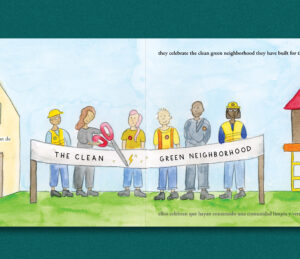
While it’s great when individual people or buildings switch to clean energy, a more coordinated approach called neighborhood-scale building decarbonization makes it easier and more efficient, fun, and cost-effective for neighborhoods to transition. A neighborhood-scale project is perfect for labor unions, who have a history of doing big infrastructure projects and who are highly skilled due to their intensive apprenticeships and depth of experience. In our story, the union workers who build the clean green neighborhood are also the ones who live in it, which means they get to enjoy the benefits of their hard work.
We recommend two pathways for transforming an entire neighborhood into a clean, green neighborhood: the thermal energy network and the electric pathway.
Thermal energy networks
The book depicts the construction of thermal energy networks, or systems that share energy from the natural heat of the earth and excess heat produced by neighboring buildings instead of relying on non-renewable, polluting fuels. These networks look similar to the network of gas pipes that run beneath most of our neighborhoods, which is why many of the workers who currently use their special skills to build and maintain the gas system can use these same skills to build and maintain thermal energy networks.
All-electric neighborhoods
Another option is to electrify an entire block instead of installing a thermal energy network. For this pathway, workers simply swap out all of the gas appliances in each building and replace them with modern, efficient electric appliances like heat pumps and induction stoves. They can also add infrastructure for electric vehicles and upgrade doors, windows, and insulation through a process called weatherization, which makes buildings more energy efficient.
Sharing power for the greater good
Whether by way of a thermal energy network or an all-electric neighborhood, sharing energy back and forth can help us be good stewards of our resources so that future generations of people, plants, and animals can enjoy the clean, green neighborhood that builds a healthier planet. When we work to embrace shareable, renewable energy, we can create stronger, more sustainable communities today and into the future.