
Executive Summary
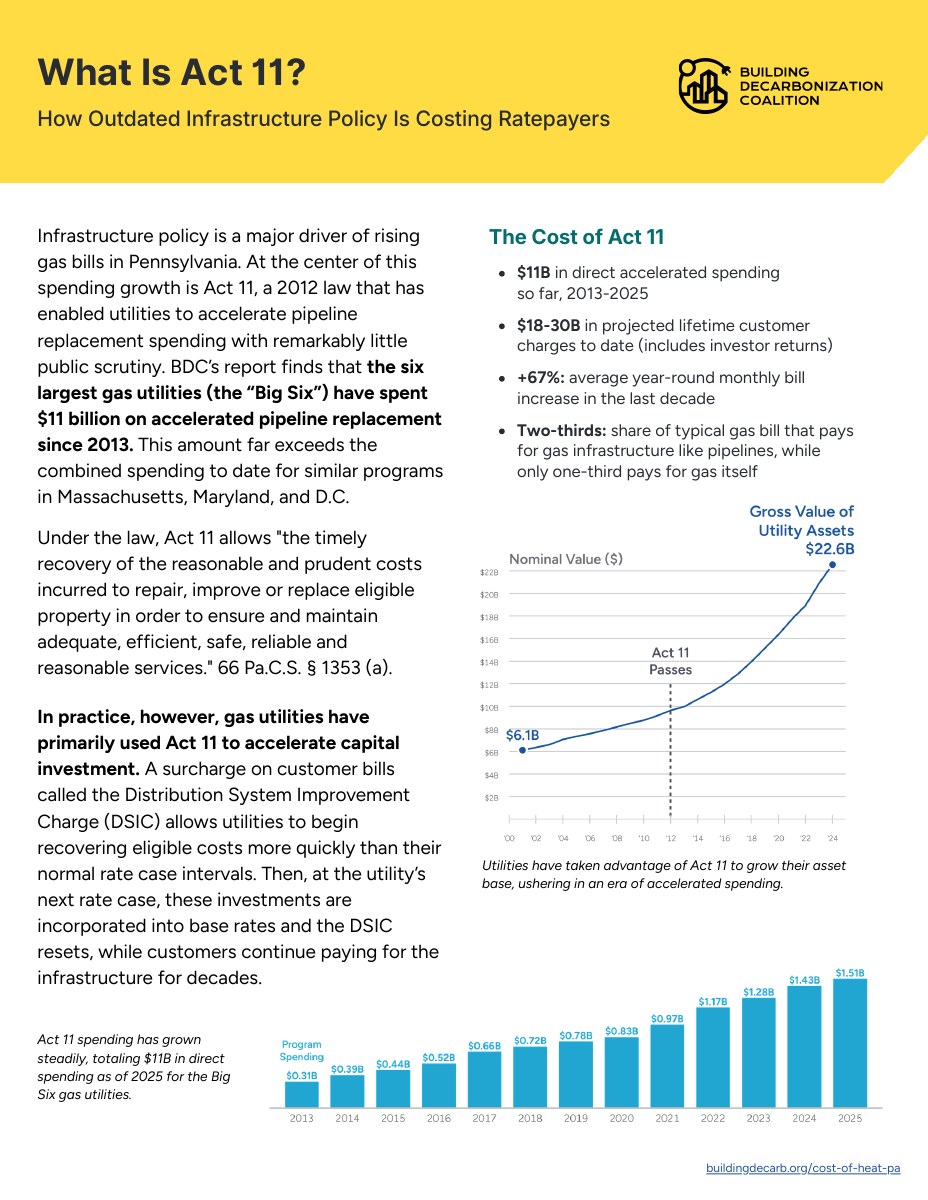
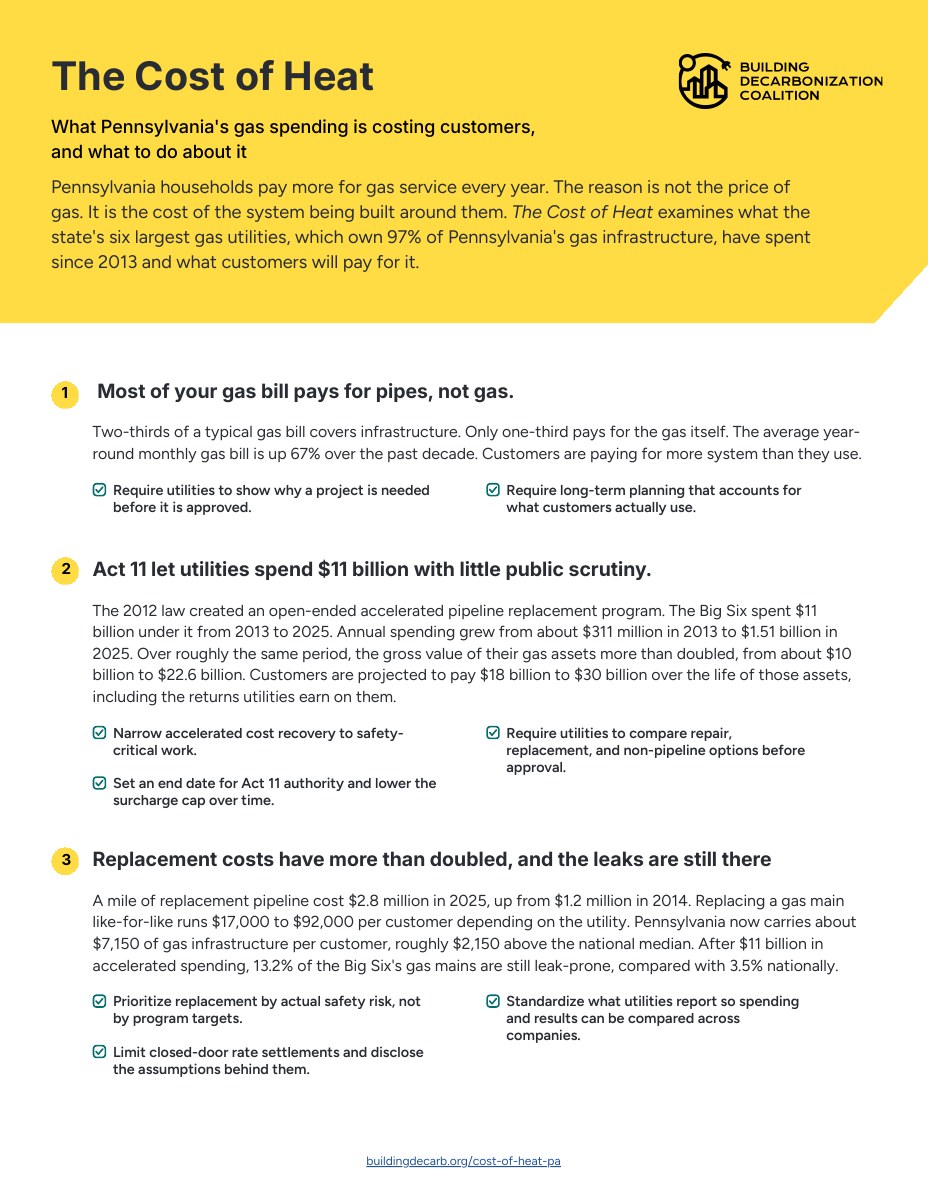
Pennsylvania households are paying more for gas service even as they use less gas. The Cost of Heat examines why, finding that infrastructure policy, particularly Act 11, is a major driver of rising bills. From 2013 through 2025, Pennsylvania’s six largest gas utilities (the “Big Six”) spent $11 billion through accelerated pipeline replacement programs authorized by this 2012 law. Once financing costs and investor returns are included, customers are projected to pay between $18 billion and $30 billion over the lifetime of those investments.
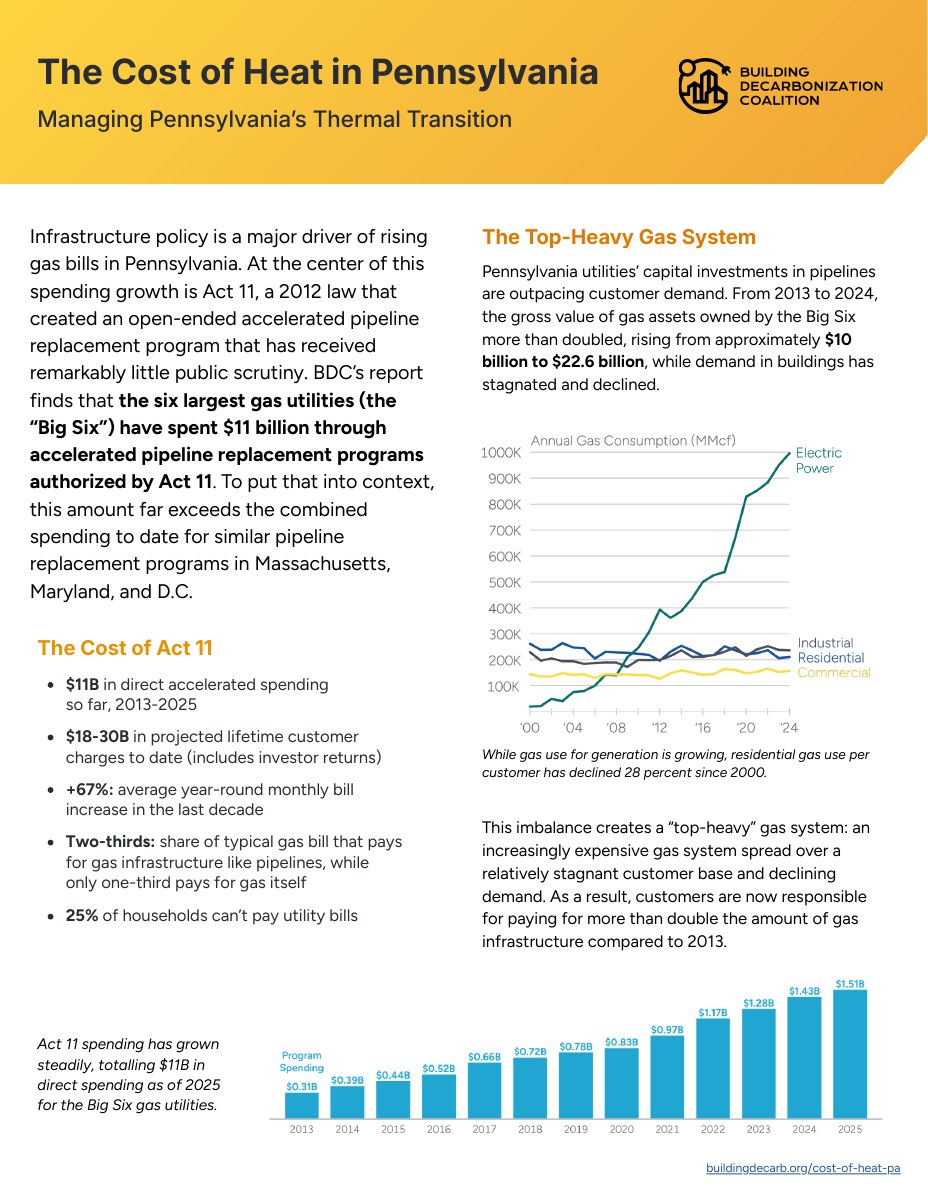
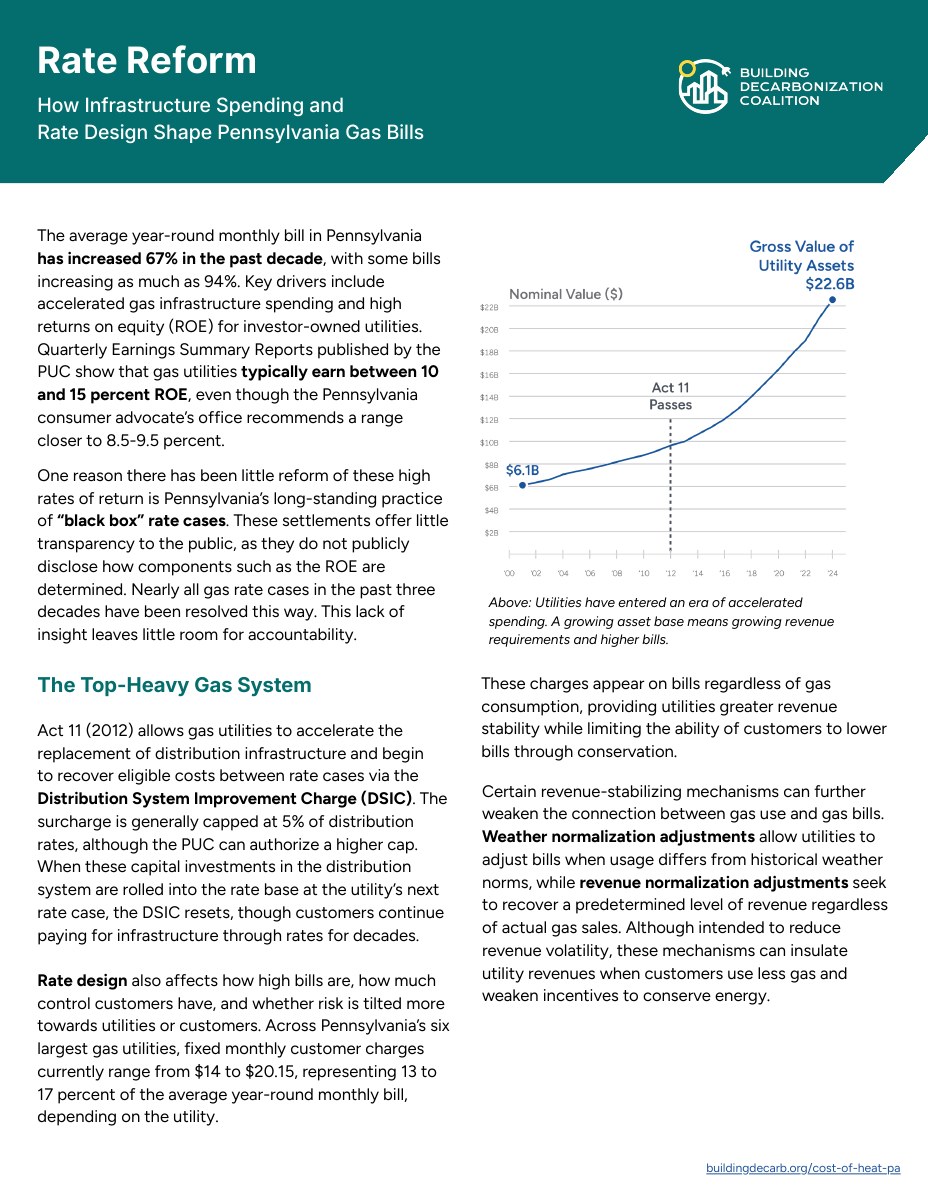
This spending has created an increasingly “top-heavy” gas system: a growing amount of infrastructure supported by a relatively stagnant customer base and declining household demand. The value of gas infrastructure owned by the Big Six more than doubled from 2013 to 2024, while residential gas use per customer has declined 28 percent since 2000. Average year-round monthly residential gas bills have risen 67 percent over the past decade, and infrastructure-related delivery charges now account for roughly two-thirds of a typical bill, while gas itself only accounts for one-third. Yet Act 11 has no overall spending limit or end date and does not require utilities to compare pipeline replacement with repair, retirement, or clean thermal alternatives.
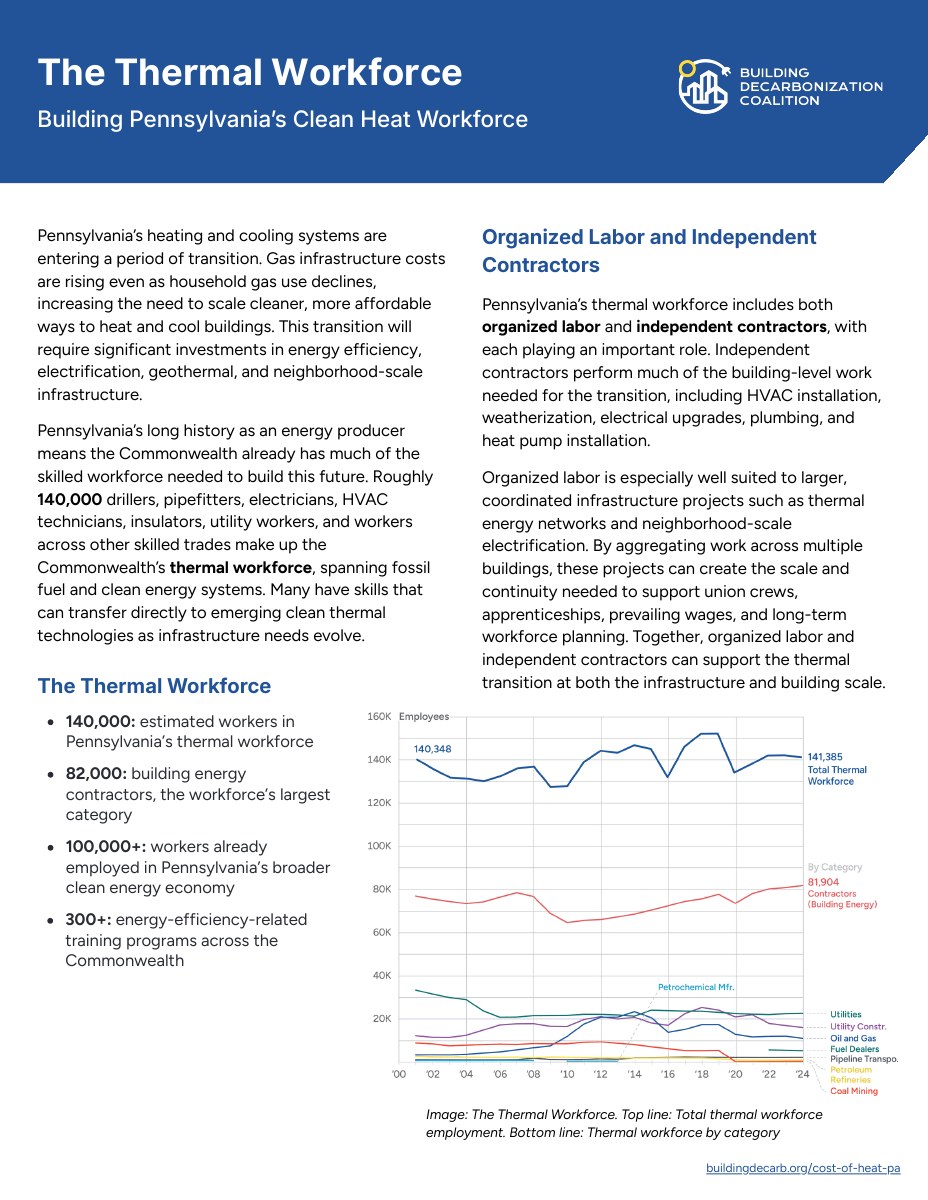
The report offers a practical roadmap for managing Pennsylvania’s thermal transition. Its recommendations include reforming Act 11, strengthening long-term gas planning and regulatory oversight, protecting customers with high energy burdens, and evaluating alternatives before aging pipelines are replaced. By coordinating neighborhood-scale investments in clean heat infrastructure and continued investment in the already robust thermal workforce, Pennsylvania can avoid costly and unnecessary gas investment. These reforms can lower long-term costs and direct investment toward the heating systems Pennsylvania’s communities will rely on in the future.
Additional Resources
Executive Summary
Pennsylvania households are paying more for gas service even as they use less gas. The Cost of Heat examines why, finding that infrastructure policy, particularly Act 11, is a major driver of rising bills. From 2013 through 2025, Pennsylvania’s six largest gas utilities (the “Big Six”) spent $11 billion through accelerated pipeline replacement programs authorized by this 2012 law. Once financing costs and investor returns are included, customers are projected to pay between $18 billion and $30 billion over the lifetime of those investments.
This spending has created an increasingly “top-heavy” gas system: a growing amount of infrastructure supported by a relatively stagnant customer base and declining household demand. The value of gas infrastructure owned by the Big Six more than doubled from 2013 to 2024, while residential gas use per customer has declined 28 percent since 2000. Average year-round monthly residential gas bills have risen 67 percent over the past decade, and infrastructure-related delivery charges now account for roughly two-thirds of a typical bill, while gas itself only accounts for one-third. Yet Act 11 has no overall spending limit or end date and does not require utilities to compare pipeline replacement with repair, retirement, or clean thermal alternatives.
The report offers a practical roadmap for managing Pennsylvania’s thermal transition. Its recommendations include reforming Act 11, strengthening long-term gas planning and regulatory oversight, protecting customers with high energy burdens, and evaluating alternatives before aging pipelines are replaced. By coordinating neighborhood-scale investments in clean heat infrastructure and continued investment in the already robust thermal workforce, Pennsylvania can avoid costly and unnecessary gas investment. These reforms can lower long-term costs and direct investment toward the heating systems Pennsylvania’s communities will rely on in the future.
Additional Resources
Keep the Momentum Going
This report is shaping important conversations about the future of gas and buildings. Join the conversation on LinkedIn, Bluesky, and Instagram.
Connect With Us